
CBSE to Revamp Class 9–10 Syllabus from 2026-27; Third Language Mandatory, Two Levels for Maths & Science
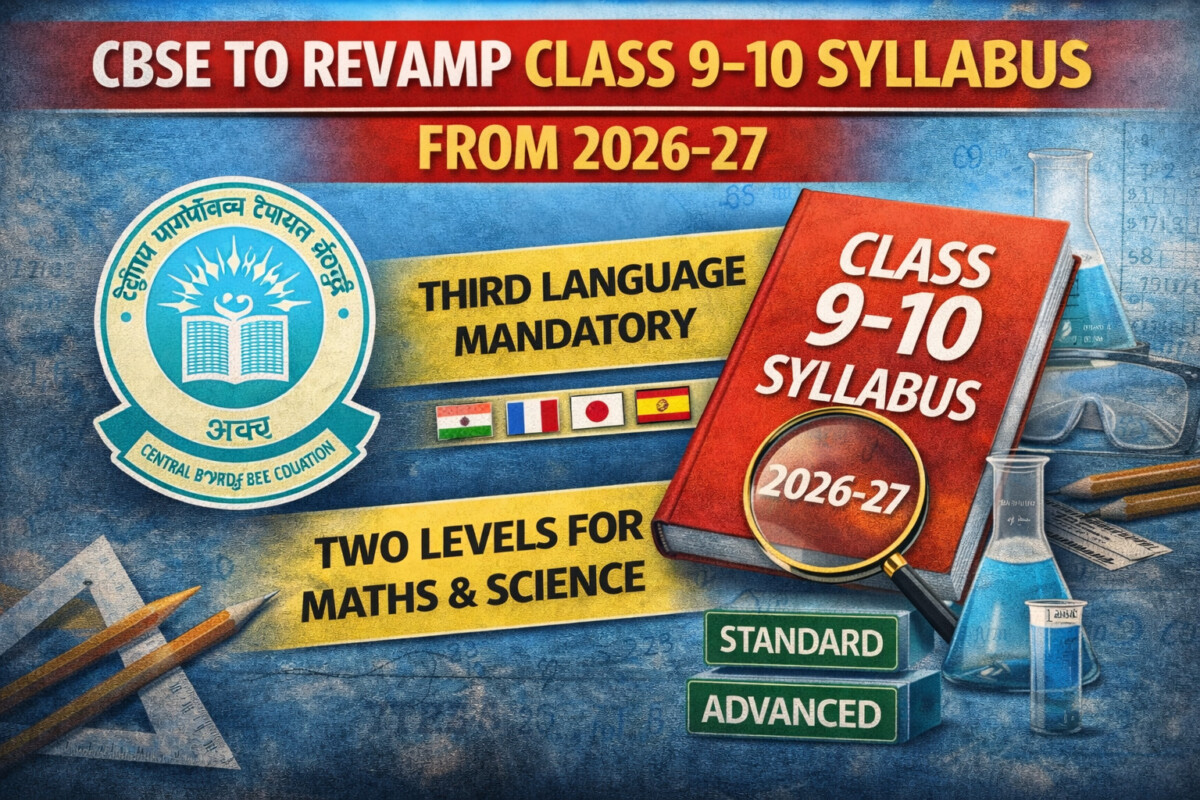
The Central Board of Secondary Education (CBSE) is set to introduce major changes in the Class 9 and 10 curriculum from the 2026–27 academic session. These reforms are aligned with the National Education Policy and aim to make learning more practical, flexible, and concept-based.
📚 Key Changes in the New Syllabus
🌐 Third Language to be Mandatory
Under the new structure, students will be required to study a third language.
- This move strengthens multilingual learning
- Encourages better understanding of linguistic diversity
📐 Two Levels of Mathematics
CBSE plans to introduce two levels of Mathematics:
- Basic Level – for general academic learning
- Advanced Level – for students preparing for competitive exams
👉 This will allow students to choose based on their interest and capability.
🔬 Science to Have Multiple Levels
- Similar to Mathematics, Science may also be offered in two levels
- This will help students study the subject according to their learning pace and depth
🧠 Focus on Concept-Based Learning
The revised syllabus will emphasize:
- Concept clarity over rote learning
- Application-based understanding
- Critical thinking and problem-solving skills
👉 The shift aims to reduce memorization and promote deeper learning.
📘 Introduction of New-Age Subjects
- Inclusion of modern and skill-based subjects
- Greater focus on digital education and practical knowledge
- Restructuring of existing topics for better clarity
📝 Changes in Assessment Pattern
- Increased weightage for internal assessment
- Possibility of case-study and analytical questions
- Exams to test understanding rather than memorization
⚠️ Challenges for Schools
The transition to the new syllabus may pose initial challenges:
- Delay in availability of updated textbooks
- Need for teachers and schools to adapt to the new system
🎯 Impact on Students
- More flexibility in subject choices
- Better preparation for competitive exams
- Improved conceptual understanding
- Initial adjustment challenges during implementation
📝 Conclusion
The reforms introduced by the Central Board of Secondary Education mark a significant step towards transforming the school education system. By focusing on skills, flexibility, and real-world application, the new syllabus is expected to better prepare students for future academic and career challenges.